How Django Models Store Blog Data
A simple article about how Django models describe blog data and save it in the database.
Django models are one of the most important parts of a blog project.
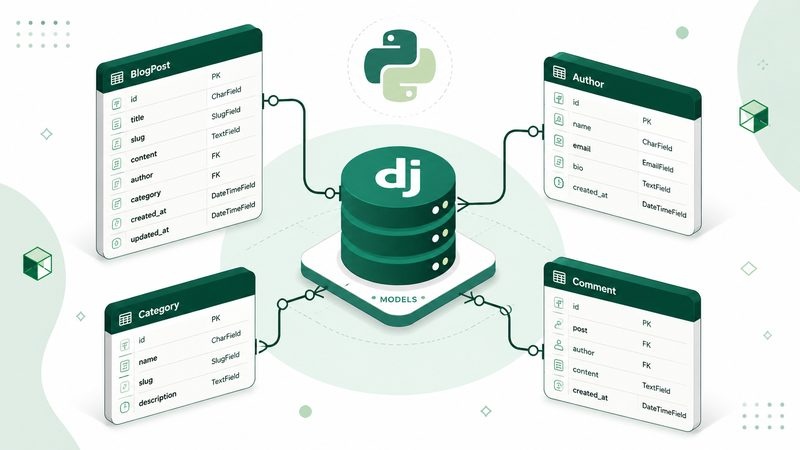
A model describes the data that the project needs to store. In a blog, this data can be posts, categories, users, comments, and tags.
For example, a blog post usually has a title, description, content, author, category, and date. All these fields can be described in a Django model.
Django uses models to work with the database. The developer writes Python code, and Django helps create the database tables from this code.
This is useful because we do not need to write all SQL commands by hand. Django gives us a clear way to describe the data inside the project.
Models also help keep the project organized. If the Post model is clear, it is easier to understand what a blog post can have.
A category model can help group posts by topic. For example, one post can be in the Models category, and another post can be in the Views category.
A model can also have relationships. For example, a post can be connected to one author. A post can also be connected to one category and many tags.
Migrations are another important part of models. When a model changes, Django can create a migration. A migration tells the database how to update its structure.
Models are not only for storing data. They can also have methods. A method can help return a post URL, show a readable name, or add small business logic.
In DevJournal, models are the base of the blog. They help store posts, organize content, and connect different parts of the project.
Good models make the rest of the project easier to build. Views, templates, forms, and admin pages all depend on the data structure.