Building My First Django Blog
A simple introduction to DevJournal, a Django blog project built to practice backend development.
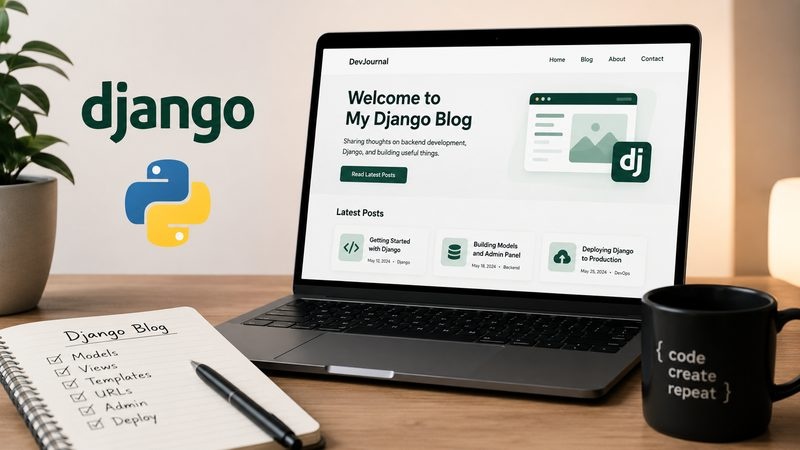
DevJournal is my first complete Django blog project.
The main goal of this project is practice. I wanted to build a real web application, not only read theory or write small examples.
A blog is a good project for learning Django. It has many important parts of a real website. It needs posts, users, categories, tags, pages, forms, and an admin panel.
In DevJournal, users can read posts on the main page. Each post has a title, description, content, author, category, tags, and date. Some posts can be published, and some posts can stay as drafts.
The project also has categories. Categories help organize posts by topic. For example, there are categories for Django, Development, and Project Notes.
Tags are also useful. They give extra information about a post. A post can have several tags, and this makes the blog easier to search and understand.
The admin panel is an important part of the project. It helps manage posts, categories, users, and other data. This is one of the reasons why Django is a strong framework for this type of project.
While building this blog, I practiced models, views, templates, URLs, forms, static files, media files, and authentication. These are basic but very important parts of Django.
The project also helped me understand deployment. DevJournal is not only a local project. It runs on a real server with Docker, PostgreSQL, Gunicorn, Nginx, a domain name, and HTTPS.
This project is still simple, but it is a real step forward. It shows how different parts of Django work together in one application.
DevJournal will continue to improve. The next steps can include better profiles, search, more tests, and new features.